
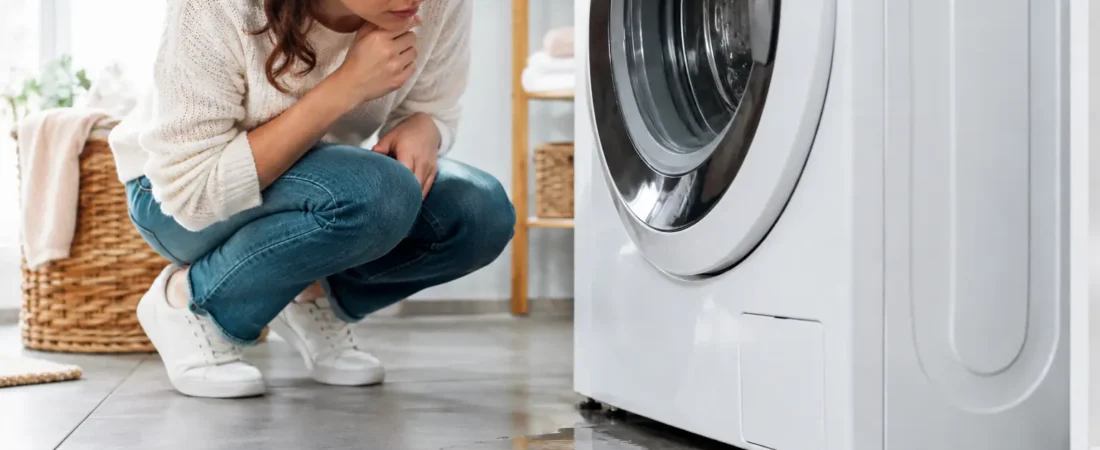
A washing machine leaking from bottom is not a problem to ignore, especially in a South Florida condo, where a small amount of water can quickly reach flooring, baseboards, or a neighboring unit. The puddle may appear during filling, agitation, draining, or after the cycle ends. That timing is one of the most useful clues for finding the source.
Before moving the washer or removing any panels, unplug it and turn off both water supply valves. If water is still present, use towels or a wet vacuum to contain it. Then run through a few safe checks to determine whether the leak is external and simple or coming from a part that needs repair.
First, confirm the water is coming from the washer
Water on the floor near a laundry area is not always caused by the washing machine itself. A nearby water heater, air-conditioning condensate line, utility sink, or plumbing connection can create a similar puddle. Check the floor around the washer before and after a cycle, and look for drips at the rear water connections.
If the water appears only while the washer drains, the issue may be the drain hose or standpipe rather than the appliance. If it appears while the machine fills, suspect an inlet hose, inlet valve, or detergent overflow. A leak that begins during spinning or continues after the cycle is more likely connected to the drain pump, tub seal, or internal hose.
Taking a photo of the puddle location and noting when it begins can save time during a service visit. It is more helpful than simply reporting that the washer leaks from underneath.
Common reasons a washing machine leaks from the bottom
Loose or damaged water supply hoses
The hot and cold supply hoses connect at the back of the washer. Their fittings can loosen over time, and rubber hoses can crack, swell, or deteriorate. A slow leak may run down the rear cabinet and collect underneath the machine, making it look like an internal leak.
Look for moisture around both hose connections and along the hose length. Do not overtighten the fittings, which can damage threads or seals. If a hose is visibly worn, replace it rather than attempting a temporary patch. Braided stainless-steel hoses are often a worthwhile upgrade, particularly for seasonal residences that may sit vacant for part of the year.
Drain hose problems and standpipe backups
A drain hose that has slipped out of the standpipe, has a split, or is pushed too far down can spill water during the drain portion of the cycle. The standpipe itself can also drain slowly because of a partial plumbing blockage. In that situation, water may rise and overflow even though the washer is working normally.
Check that the hose is secured and that the drain connection is not obstructed. The hose should not be sealed airtight inside the standpipe. An improper installation can create siphoning or drainage problems. If the standpipe backs up, a plumber may be needed; replacing washer parts will not correct a building drain issue.
A leaking drain pump or pump hose
The drain pump moves water out of the tub. On many front-load and top-load washers, it sits low in the cabinet, so a pump leak often shows up as water coming from the bottom center or front of the unit. The pump housing can crack, a hose clamp can loosen, or a small object can damage the pump or obstruct it.
Coins, hairpins, bra wires, and small clothing items are common culprits. Some front-load washers have a service filter that can be cleaned, but the procedure varies by model. Opening a filter without preparing for trapped water can create a much larger spill. If you are unsure whether your washer has a filter or how to access it, professional service is the safer choice.
Door boot or dispenser leaks on front-load washers
Front-load washers use a flexible rubber door boot to keep water inside the tub. Tears, worn folds, or debris caught near the seal can let water escape down the front of the machine. Because water travels along the cabinet, the puddle may still seem to come from the bottom.
Inspect the visible portion of the door gasket for cracks, trapped fabric, and buildup. Also check the detergent dispenser. Using too much high-efficiency detergent, using non-HE detergent in an HE washer, or adding excessive detergent can create suds that force water out of the dispenser or door area.
A worn tub seal, bearing area, or internal tub problem
A leak from the center underneath the washer can point to a failed tub seal. This seal helps prevent water from reaching the bearings and drive components. As it wears, water may drip during wash or spin cycles, sometimes accompanied by a grinding, rumbling, or unusually loud spin.
This is not typically a do-it-yourself repair. Accessing the seal can require extensive disassembly, and the condition of the tub bearings, basket shaft, and outer tub must be evaluated at the same time. On an older washer, the cost of a major tub repair may need to be weighed against the appliance’s age, condition, and expected remaining life.
Overloading or unbalanced loads
A single overloaded cycle can cause splashing, excessive movement, or a temporary leak from an area that is normally sealed. Large blankets, rugs, and uneven loads are frequent causes. The washer may shake enough to pull on hoses or allow water to escape around the tub opening.
If the machine leaks only with oversized loads, reduce the load size and distribute items evenly. That does not rule out a worn suspension component, but it is a useful test. A washer that walks across the floor or bangs hard during spin should be checked before it damages hoses, flooring, or the machine itself.
A safe troubleshooting sequence
After shutting off power and water, dry the floor and inspect the rear supply hoses, drain hose, and visible connections. Next, check the detergent drawer, door gasket, and area around the base for residue or drip marks. White mineral deposits can indicate a slow leak that has been happening for some time.
If no obvious cause is visible, restore water and power only when it is safe to do so. Run a short cycle while watching from a safe distance. Do not reach behind or underneath a running washer. Notice whether the leak begins during fill, wash, drain, or spin. Stop the cycle immediately if water reaches an electrical outlet, power strip, or exposed wiring.
For stackable laundry units, built-in installations, and washers in tight closets, avoid forcing the appliance out by yourself. Water lines, drain hoses, venting, and cabinetry can be damaged easily. This is especially relevant in apartments and condominiums, where access and water shutoff requirements may be controlled by the building.
When professional washer repair is the right call
Call for service if the leak comes from inside the cabinet, returns after hose connections are checked, or is accompanied by grinding noises, burning smells, error codes, or poor draining. A technician can remove panels safely, inspect the pump and internal hoses, test the inlet valve, and identify whether the tub seal or another major component is involved.
Prompt diagnosis matters because water damage often costs more than the appliance repair. In Miami-Dade and Broward County, King Appliances regularly sees washer leaks that began as a small drip and later damaged laminate flooring, cabinetry, or ceilings below. A clear diagnosis helps determine whether a repair is practical and prevents replacing parts based on guesswork.
Simple habits that help prevent future leaks
Use the detergent amount recommended for your washer and detergent type, not simply the maximum marked on the cap. Leave the door or lid open after a load when the manufacturer’s instructions allow it, so moisture can dry and residue does not build up around seals. Check supply hoses periodically for corrosion, bulges, stiffness, or drips.
Avoid repeatedly overloading the washer, and inspect pockets before washing. Small objects that escape into the tub area can damage pumps and hoses. If you leave a home vacant for extended periods, consider turning off the washer’s water supply valves after confirming that doing so fits your household routine and building requirements.
A dry laundry floor is worth paying attention to. Catching the first signs of a leak, documenting when it occurs, and stopping the washer before another full cycle can protect both the appliance and the home around it.