
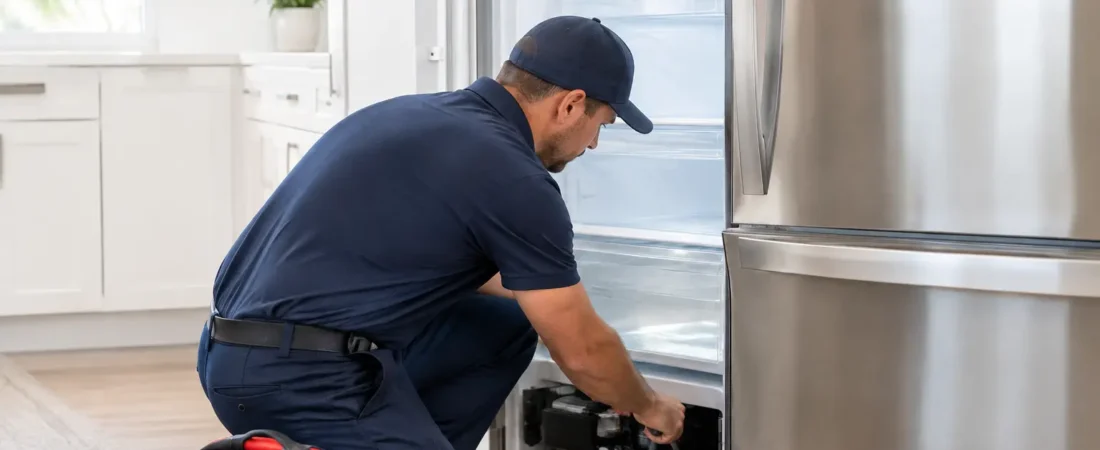
A search for refrigerator repair hollywood fl often begins after a refrigerator has already disrupted the household: milk is warm, the freezer is softening, ice has stopped, or water is spreading across the floor. Some problems have a simple explanation, but a refrigerator that is not holding safe temperatures should be treated as time-sensitive. The appliance protects food, and delayed action can turn a minor repair into spoiled groceries, water damage, or a larger component failure.
South Florida homes also place particular demands on refrigeration. High indoor humidity, frequent door opening, warm garages, and condo water connections can all contribute to performance issues. A few careful checks can help identify what is happening, but they do not replace a diagnosis when cooling has become unreliable.
Start With Food Safety and Basic Checks
Before troubleshooting, check the food. A refrigerator compartment should generally stay at or below 40°F, while the freezer should be at 0°F. If a thermometer shows temperatures above those ranges for several hours, move perishable food to another working refrigerator or cooler when possible. Do not rely on whether the interior merely feels cool to the touch.
Then confirm that the refrigerator has power. Interior lights can be misleading because some units may have lighting even when a cooling component is not operating correctly. Listen for the compressor or fans, check that the temperature controls have not been changed accidentally, and make sure the unit is not in a cooling-off, showroom, or Sabbath-related mode where applicable. The instructions vary widely by brand and model.
Also look at the door closure. A door held slightly open by a package, damaged gasket, or misaligned shelf lets warm, humid air enter continuously. That can cause poor cooling, excessive frost, condensation, and long run times. Wipe the gasket clean and inspect it for tears, hard spots, or sections that no longer sit flat against the cabinet.
Common Refrigerator Problems and What They May Mean
Refrigerator symptoms often overlap. For example, a warm fresh-food section can result from an airflow issue, a defrost failure, a fan problem, a control issue, or a sealed-system concern. The following signs are useful observations, not a definitive diagnosis.
The refrigerator is warm but the freezer is cold
This pattern frequently points to restricted airflow between the freezer and refrigerator sections. Frost can block an air channel, or an evaporator fan may not be moving cold air properly. A failed damper, sensor, heater, or defrost component can produce similar symptoms.
Avoid chipping ice with a knife or sharp tool. Refrigerator liners and evaporator coils can be punctured easily, and a puncture can require major repair. If heavy frost is visible on the rear freezer panel, a technician can determine whether the unit has a defrost-system problem rather than simply a one-time ice buildup.
Both sections are too warm
When neither compartment cools properly, check for obvious issues first: a tripped breaker, an unplugged cord, a blocked exterior vent area, or temperature controls set incorrectly. If the appliance has power but is running constantly without reaching temperature, the cause may involve the condenser fan, compressor start components, electronic controls, or the sealed refrigeration system.
Warmth in both sections is not a problem to postpone. Repeatedly adjusting the controls colder rarely fixes the underlying issue and can make it harder to understand how the unit is behaving.
The refrigerator runs constantly or feels unusually hot
The cabinet sides, center divider, and area around the compressor can feel warm during normal operation. However, a refrigerator that runs almost nonstop, makes repeated clicking noises, or produces noticeably less cooling may need service.
Dirty condenser coils can contribute to poor heat removal on models with accessible coils. If the manufacturer permits it, unplug the unit and carefully vacuum loose dust from the coil area and lower grille. Do not bend tubing or use excessive force around wiring and fan blades. Many newer refrigerators have concealed condensers, so attempting to access parts that are not designed for homeowner cleaning is not advisable.
Water is leaking onto the floor
First identify the water source. A small amount of moisture near the front may come from condensation, a poor door seal, or a full drip tray after unusually humid conditions. Water from behind the refrigerator may come from the supply line, filter housing, inlet valve, or ice maker connection.
Turn off the refrigerator water supply if the leak is active or increasing. Water near electrical connections, warped flooring, or cabinetry calls for prompt attention. In condos, even a slow leak can affect units below, so it is worth addressing before it becomes a property issue.
The ice maker has stopped producing ice
An ice maker needs a cold freezer, adequate water flow, a working inlet valve, and a functioning ice maker assembly. Start by checking that the ice maker is switched on, the shutoff arm is not raised, and the freezer is cold enough. Make sure the water supply valve is open and the filter is not overdue for replacement.
A filter replacement may improve reduced water flow, but it will not correct every ice maker problem. Frozen fill tubes, faulty valves, failed sensors, worn ice maker modules, and control-board issues are all possible. Premium built-in models and refrigerators with external dispensers can have more complex ice systems, making professional testing especially useful.
When Refrigerator Repair Is the Safer Choice
A refrigerator can be expensive to replace, particularly built-in and premium models from Sub-Zero, Liebherr, Miele, Thermador, Viking, and Bosch. Repair is often practical when the cabinet is in good condition and the problem is a serviceable component such as a fan motor, door gasket, defrost part, valve, sensor, or control.
The decision is more complicated when an older unit has a major sealed-system failure, a compressor problem, or multiple recurring repairs. Age, part availability, energy use, installation type, and the expected repair cost all matter. A built-in refrigerator may justify a different repair decision than a standard freestanding unit because replacement can involve cabinetry changes and significantly higher installation costs.
Call for professional service promptly if you notice any of these conditions:
- The refrigerator is above safe temperature, especially if both sections are warm.
- A breaker trips, there is a burning smell, sparking, or repeated clicking from the rear of the unit.
- Water is leaking from a supply connection, filter housing, or ice maker area.
- Frost returns quickly after being cleared, or the refrigerator repeatedly stops cooling.
- The display shows an error code, particularly on a premium or connected appliance.
These symptoms may involve electrical components, pressurized refrigerant lines, or hidden water connections. They are not appropriate for trial-and-error repairs.
What a Professional Refrigerator Diagnosis Should Cover
A useful service visit starts with the actual symptom and operating conditions, not a guess based on one part. The technician should evaluate temperatures, airflow, fan operation, frost patterns, door sealing, drainage, water connections, and relevant electrical or control functions. Depending on the refrigerator, testing may include sensors, heaters, compressors, start devices, valves, and communication between electronic boards.
Clear information helps speed up the process. Note when the problem began, whether it is constant or intermittent, any error messages, recent power interruptions, and whether the unit was moved or cleaned. If possible, have the model number available. On many refrigerators it is located inside the fresh-food compartment, along the side wall, ceiling, or door frame.
For homeowners, landlords, and property managers in Hollywood and nearby Broward and Miami-Dade communities, King Appliances can assess common and premium refrigerator systems and explain the repair findings in practical terms. A good repair recommendation should distinguish between a confirmed failed part, a likely cause that requires further testing, and an issue that may make replacement worth considering.
Simple Habits That Help Refrigerators Last
Do not pack the refrigerator so tightly that vents are blocked. Cold air needs room to circulate, especially around the rear interior wall and freezer vents. Let hot food cool briefly before storing it, keep doors closed while deciding what to take out, and replace worn gaskets before they create chronic condensation.
For units with water dispensers or ice makers, use the filter type and replacement interval specified for the model. If a seasonal home will be vacant for an extended period, consider the manufacturer’s guidance for water supply shutoff, ice maker operation, and temperature settings. The right approach depends on the refrigerator and whether the home remains climate controlled.
If your refrigerator is signaling a problem, take a temperature reading, protect perishable food, and document the symptom before it changes. Those small steps give a repair technician a clearer starting point and give you a better chance of resolving the issue before it becomes a bigger interruption.