
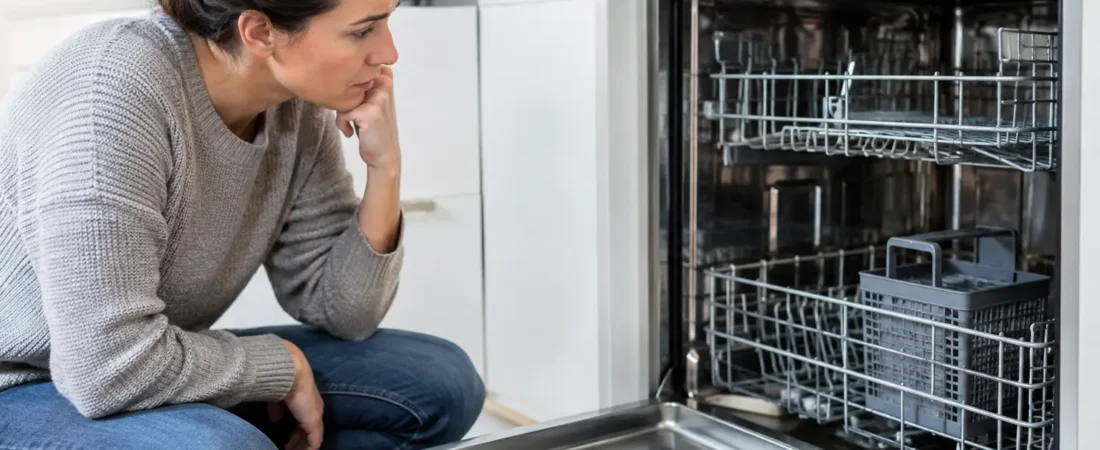
A dishwasher not draining is usually noticed at the end of a cycle: dishes may be clean, but an inch or two of cloudy water remains in the tub. That water does not automatically mean the drain pump has failed. In many cases, a blocked filter, food debris, a kinked hose, or a sink-side drainage issue is responsible. The right repair starts by confirming where the restriction is rather than replacing parts based on symptoms alone.
A small amount of water in the filter area is normal on many dishwashers. Standing water across the bottom of the tub, a bad odor, or water that returns after the dishwasher has drained are different conditions and deserve attention. Acting early can prevent leaks, poor wash results, and damage to the pump.
Start With a Safe, Simple Inspection
Before reaching into the bottom of the dishwasher, turn the appliance off at its breaker or unplug it if the plug is accessible. Remove the lower rack and use towels, a cup, or a wet/dry vacuum to take out standing water. Avoid using sharp tools around the sump area, where plastic components, seals, and the pump cover can be damaged easily.
Check the dishwasher filter next. Bosch, Miele, KitchenAid, Whirlpool, GE, Samsung, LG, and many other models use a removable filter or screen assembly near the bottom spray arm. Twist or lift it out according to the model’s design, then rinse away grease, paper labels, broken glass, seeds, and food particles. A filter that looks only lightly soiled can still have a greasy film that limits water flow.
Look inside the sump opening after the filter is out. Foreign objects commonly collect there, especially small bones, glass fragments, twist ties, produce stickers, and pieces of plastic. If an object is clearly visible and easy to remove, use gloved fingers or blunt tweezers. Do not force a pump cover or reach deep into an opening if the component does not release normally.
Why a Dishwasher Is Not Draining
The drain system works as a path: water leaves the tub through the filter and sump, passes through the drain pump, travels along the drain hose, and enters the kitchen sink drain, garbage disposal, or air gap. A failure at any point can leave water behind. The timing of the problem often helps narrow it down.
A clogged filter or sump
This is one of the most common causes, particularly in homes where dishes are loaded with heavy food residue. Modern dishwashers are designed to handle normal food particles, but they are not disposal units. Grease, rice, pasta, coffee grounds, and paper from container labels can build up in the filter and sump.
A clogged filter may cause slow draining rather than a complete failure. You may hear the drain pump running, but the water level drops only a little. Cleaning the filter and removing visible debris may correct the issue if no deeper blockage is present.
A blocked or improperly installed drain hose
The drain hose can become kinked behind the dishwasher, pinched during cabinet work, or blocked by residue. A hose that sags too low or lacks a proper high loop can also allow dirty sink water to flow backward into the dishwasher. In some South Florida condos, a dishwasher may be installed in a tight cabinet opening where hose routing is especially easy to disturb during flooring, plumbing, or appliance replacement.
Inspect only the visible portion of the hose if it can be done without pulling the dishwasher out. If the hose appears crushed, brittle, or sharply bent, professional service is a safer choice. Moving a built-in dishwasher without disconnecting power, water, and mounting hardware can damage the floor, cabinet, or water line.
A sink drain, garbage disposal, or air-gap blockage
If the dishwasher drain hose connects to a garbage disposal, run cold water and operate the disposal briefly to clear the connection. A newly installed disposal may still have its dishwasher inlet knockout plug in place. When that happens, the dishwasher can pump but has nowhere for the water to go.
Homes with an air gap usually have a small fitting near the kitchen faucet. Water backing up or spilling from that fitting points to a restriction in the air gap or hose. Remove the cap and clean accessible debris, but do not use excessive force. If the sink itself drains slowly, the plumbing line may be the real issue rather than the dishwasher.
A worn drain pump or electrical fault
A drain pump can fail mechanically, jam, or lose power. A humming sound with no water movement can indicate an obstruction or a seized pump. Silence during the drain portion of the cycle may indicate a failed pump, wiring issue, control problem, or a door-latch condition preventing the machine from operating.
These symptoms require diagnosis rather than guesswork. Pumps, control boards, and wire harnesses vary by model, and premium appliances such as Miele, Thermador, Viking, and Bosch may have model-specific access procedures and error codes. Replacing a pump without confirming the blockage path can add expense without correcting the problem.
How to Test the Drain Function
Once the filter is clean and standing water has been removed, restore power and select Cancel, Drain, or Reset, depending on the dishwasher model. Listen closely during the drain portion. A normal pump produces a steady mechanical sound and water should move through the drain within a short period.
If the dishwasher drains fully and stays empty, run a short rinse cycle while checking beneath the sink for drips. If water returns to the tub after it has drained, the concern is more likely backflow from the sink connection, drain hose routing, or a plumbing restriction. If the pump runs but the water remains, a blockage downstream of the pump is more likely. If the pump does not run at all, stop repeated attempts and arrange service.
Do not add chemical drain cleaner to the dishwasher. These products can damage internal hoses, seals, and pump components, and they may create a burn hazard for anyone servicing the appliance afterward. Vinegar is also not a fix for a physical obstruction. It may help with light mineral residue in the right situation, but it will not dissolve glass, plastic, food debris, or a clogged hose.
When Professional Dishwasher Drain Repair Is Needed
Some drainage problems are appropriate for homeowner maintenance. Others call for a technician with access to the pump, hose connections, electrical components, and manufacturer-specific diagnostic information. Professional repair is recommended when you notice any of the following:
- Water leaks from under the dishwasher or cabinet base.
- The drain pump hums, grinds, or repeatedly trips the breaker.
- The dishwasher displays an error code that returns after the filter is cleaned.
- Water backs up through the sink, disposal, or air gap.
- The appliance has been recently installed, moved, or connected to a new garbage disposal.
- The unit drains inconsistently, particularly after multiple reset attempts.
Property managers and seasonal residents should also avoid leaving a dishwasher with standing water unattended. Besides odor and staining, hidden moisture can affect cabinet materials and flooring. A technician can separate an appliance fault from a sink-drain problem, verify the hose configuration, and test the drain pump under operating conditions.
King Appliances assists homeowners and property managers across Miami-Dade and Broward County with dishwasher drainage issues, including service for major and premium brands. A proper visit should identify the failed or blocked component before recommending repair, especially when a pump, control, or installation correction is involved.
Preventing Future Drain Problems
Routine care is simpler than recovering from a complete blockage. Clean the filter about once a month, or more often in a busy household. Scrape heavy food waste from plates before loading, and check that labels, small utensils, and lightweight plastic pieces cannot fall through the rack.
Use the detergent amount recommended for your water conditions and dishwasher model. Too much detergent can leave residue, while excessive grease from cookware can coat the filter and drain path. Running hot water at the kitchen faucet before starting a cycle can also help the dishwasher begin with hotter incoming water, improving how well detergent breaks down food residue.
If your dishwasher is not draining after these basic checks, resist the temptation to keep restarting it. The most useful next step is a diagnosis that follows the entire drain path – from the filter to the sink connection – and confirms the actual cause before a repair is made.