
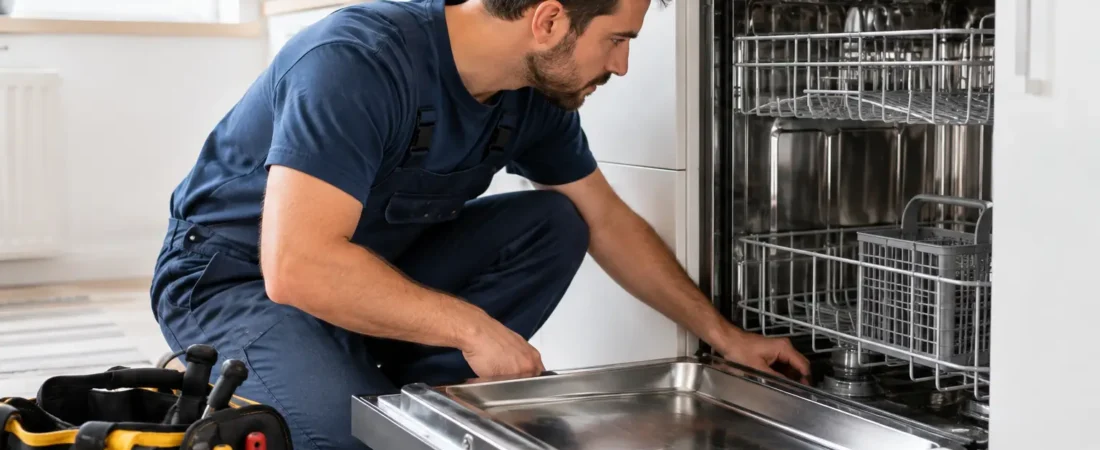
A dishwasher that suddenly leaves food on every plate, stops draining, or leaks beneath the door can create an immediate decision: is this a repairable problem, or is it time to shop for a replacement? Knowing when to replace vs repair a dishwasher comes down to more than the current symptom. The appliance’s age, repair history, condition, parts availability, and the cost of a verified repair all matter.
A professional diagnosis should come before a replacement decision whenever possible. Many dishwasher problems that appear serious, including poor cleaning, standing water, and cycle interruptions, can be caused by a single worn part, a blocked filter, or an installation issue. Other failures point to a larger investment that may not make sense on an older machine.
Start With the Dishwasher’s Age and Overall Condition
Most residential dishwashers have an expected service life of roughly 10 to 12 years, though that range is not a guarantee. A well-maintained Miele, Bosch, KitchenAid, or other premium model may remain a practical repair candidate beyond that point. Conversely, a lower-cost unit with repeated failures at six or seven years old may no longer be economical to keep.
Age is only one part of the picture. Consider how the dishwasher has performed during the past year. Has it needed several service calls? Are the racks rusting, the door seal deteriorating, and the controls becoming unreliable? When multiple systems show wear at once, repairing only the newest failure may provide a short-term fix rather than a dependable solution.
For a newer dishwasher in otherwise good condition, repair is usually the more sensible path. Replacing a circulation pump, drain pump, inlet valve, latch, heating element, or door gasket can often restore normal operation without the expense and disruption of installing a new appliance.
When to Repair a Dishwasher
Repair generally makes sense when the problem is isolated, the machine is under about eight years old, and the repair cost is substantially lower than a comparable replacement. It also makes sense when the dishwasher is a premium built-in model that was designed with long-term serviceability in mind.
Problems That Are Often Repairable
A dishwasher that will not drain does not automatically need replacement. Food debris in the filter, a blocked drain hose, a failed drain pump, or a problem at the air gap or garbage disposal connection can cause standing water. These issues need to be identified correctly, but they are commonly repairable.
Poor washing results are also frequently correctable. Spray arms can clog, filters can become restricted, and a weak circulation pump can reduce water pressure. If dishes come out wet or cold, the cause may be a heating element, high-limit thermostat, temperature sensor, vent assembly, or control-related issue. A technician can test the relevant components rather than replacing parts based on guesswork.
Door leaks deserve prompt attention, but they are not always a reason to replace the appliance. A damaged door gasket, loose hinge, cracked spray arm, or dishwasher that is not level can direct water outside the tub. Catching a leak early matters because water can damage flooring, cabinets, and the unit below in a condominium.
Control panel failures can be more complicated. A bad touchpad, user interface, wiring connection, or electronic control board may produce error codes, unresponsive buttons, or cycles that stop unexpectedly. Repair can still be worthwhile if the part is available and the dishwasher is otherwise in good condition.
Repair Is Especially Worth Considering When
A repair may be the better value when the dishwasher matches surrounding cabinetry and paneling, particularly in a custom kitchen. Replacing an integrated or panel-ready model can involve more than purchasing a new unit. Cabinet adjustments, panel transfer, electrical work, and plumbing changes may add to the project.
For landlords and property managers, a targeted repair can also reduce downtime between tenants. The key is to avoid repeated temporary fixes for the same underlying failure. A complete diagnosis helps distinguish a single repair from a pattern of ongoing expense.
When to Replace vs Repair a Dishwasher: The Cost Test
A useful rule of thumb is to compare the repair estimate with the price of a comparable new dishwasher, including installation and any required modifications. If the repair approaches 40 to 50 percent of replacement cost on a machine near or beyond its expected lifespan, replacement often deserves serious consideration.
That guideline is not absolute. A $500 repair on a basic 12-year-old dishwasher may be difficult to justify. The same repair on a high-end model that fits a custom kitchen and has years of potential service life may be reasonable. The decision depends on the whole appliance, not just the price of one part.
Ask for an estimate that identifies the diagnosed failure, the parts involved, and whether there are visible signs of additional wear. This provides a clearer basis for choosing between repair and replacement than a broad statement that the dishwasher is “not working.”
Replacement may be the practical choice in these situations:
- The dishwasher has a cracked tub, severely corroded interior, or major structural damage.
- It has needed multiple expensive repairs in a short period.
- Critical parts are discontinued or unavailable with no reliable alternative.
- The repair cost is high relative to a new comparable model, and the dishwasher is near the end of its normal service life.
- Water damage, repeated leaks, or electrical concerns make continued operation unsafe.
A cracked plastic or stainless tub is particularly significant. Depending on the model, tub replacement can be labor-intensive and costly enough that a new dishwasher offers better value. Do not continue running a dishwasher with an active leak while waiting to decide. Shut off power at the breaker if water has reached electrical components, and turn off the water supply if leaking continues.
Consider Efficiency, Noise, and Daily Use
New dishwashers can use less water and operate more quietly than older models. Those are valid reasons to replace an aging appliance, but they should be weighed realistically. Energy and water savings accumulate over time; they do not always offset the cost of a new machine quickly.
For many South Florida homeowners, performance and reliability matter more than small efficiency differences. A dishwasher that cleans properly, drains fully, and has no leakage issues may still be worth repairing even if it is not the newest model. On the other hand, an older unit that runs poorly, requires repeat cycles, and disrupts a busy household may not justify continued spending.
Condominium owners should also consider installation constraints before replacing a dishwasher. Appliance height, cabinet opening width, drain routing, and electrical configuration vary by building and kitchen. A replacement that looks similar online may not fit without changes on site.
Check the Simple Causes Before Calling for Service
Some dishwasher complaints can be addressed with basic homeowner maintenance. Clean the filter according to the manufacturer’s instructions, inspect spray arm openings for debris, and make sure the detergent dispenser is not blocked by a large item. Confirm that the water supply valve is open and that the garbage disposal drain connection was properly cleared after a new disposal was installed.
Do not use harsh drain cleaners inside a dishwasher or force parts that are not designed for homeowner removal. Chemical products can damage seals and internal components, while improper disassembly can create leaks or electrical risks.
If the dishwasher displays an error code, record it, but do not assume the code identifies a single failed part. Many codes indicate a condition, such as insufficient heating, poor draining, or a water-fill issue. The underlying cause still needs testing.
Get a Diagnosis Before Making the Final Call
The most expensive choice is often replacing a dishwasher that had a straightforward repair, or repeatedly repairing one that has reached the end of its useful life. A qualified technician can inspect the appliance, test its components, look for leaks and wear, and explain whether the repair is likely to provide dependable service.
King Appliances helps homeowners, condo owners, and property managers throughout Miami-Dade and Broward County evaluate dishwasher failures based on the actual condition of the appliance. Whether the unit is a Bosch, Miele, GE, Whirlpool, KitchenAid, Samsung, LG, or another major brand, the goal should be a clear repair recommendation rather than a rushed decision.
A dishwasher does not need to be perfect to be worth keeping. It needs to be safe, reliable, and sensible to maintain. Once you know what failed and what the repair will realistically accomplish, the right next step is usually much easier to see.