
A dishwasher that finishes a cycle with cloudy water pooled at the bottom is usually telling you something specific: water is not moving through the drain system as it should. Knowing how to unclog a dishwasher filter can often restore normal drainage, prevent odors, and improve cleaning results. But a dirty filter is not always the cause. A blocked drain hose, failed drain pump, stuck check valve, or disposal connection can produce nearly identical symptoms.
Before taking anything apart, run a quick check. If the dishwasher has standing water, cancel the cycle and use the drain function if your model has one. Listen closely. A steady hum with no water leaving can point to a blockage or a pump issue. Complete silence can indicate an electrical, control, or door-switch problem rather than a clogged filter.
What the dishwasher filter actually does
Most modern dishwashers use a filter assembly near the bottom of the tub, below the lower spray arm. Its job is to catch food particles and keep debris from being recirculated onto dishes or entering the drain pump. Many Bosch, KitchenAid, Whirlpool, GE, Miele, Samsung, LG, and Frigidaire models have a removable fine filter, though the shape and locking method vary by brand and model.
Some older dishwashers use a self-cleaning filtration system instead. These may have a screen or cover that is not intended for routine removal. Forcing open a part that is not designed to come out can crack the sump cover, damage seals, or create a leak. Check the use and care manual for your exact model when possible, especially with premium appliances such as Miele, Thermador, Viking, or Bosch.
A filter commonly becomes restricted by softened food residue, grease, paper labels, glass fragments, toothpicks, bones, and mineral deposits. In South Florida, hard water can also leave scale that makes fine mesh filters harder to rinse clean.
How to unclog a dishwasher filter step by step
Start with the dishwasher turned off. For added protection, switch off the circuit breaker if you will be reaching near the sump area or inspecting the pump cover. Remove the lower rack so you can work without putting pressure on the rack wheels or spray arm.
If there is standing water, remove as much as possible first. A cup, turkey baster, or small sponge works well. Keep a towel nearby because some water may remain under the filter assembly.
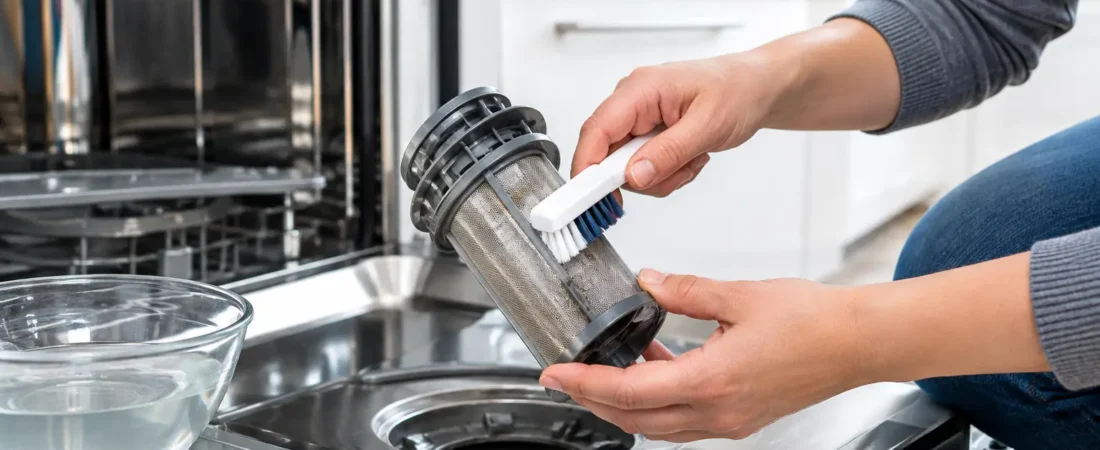
Most removable filters unlock with a short counterclockwise turn. Lift the cylindrical or mesh portion straight out, then remove any flat coarse screen beneath it if the design allows. Do not pry with a screwdriver. If the filter will not turn easily, food debris may be packed around its base, or the part may not be removable on that model.
Rinse the filter under warm running water. Use a soft nylon brush or an old toothbrush to clean the mesh and the small openings around the edges. A few drops of dish soap can help remove grease. For mineral buildup, soak the filter briefly in warm water with white vinegar, then brush and rinse it thoroughly.
Avoid wire brushes, knives, and harsh drain cleaners. Sharp tools can tear a fine mesh screen, while caustic chemicals can damage seals and may remain in the dishwasher when the next load runs. A damaged filter may look minor, but it can allow debris to reach the pump and cause a more expensive repair.
With the filter removed, inspect the filter well using a flashlight. Pick out visible debris carefully. Broken glass is common, so wear cut-resistant gloves or use tongs rather than reaching into an area you cannot see clearly. Look for labels, plastic film, seeds, or greasy residue around the drain opening.
Reinstall every filter piece in the same order. The main filter should sit flat and lock securely. If it is not fully seated, debris can bypass it and the lower spray arm may rub or fail to spin correctly. Replace the lower rack, restore power, and run a short rinse cycle while watching for normal draining.
When cleaning the filter does not solve the problem
A clean filter does not guarantee an open drain path. If water remains after a test cycle, the restriction may be beyond the filter housing. The next likely areas are the drain pump, drain hose, air gap, garbage disposal connection, and plumbing drain.
A dishwasher drain pump can be blocked by a small piece of glass, a fruit pit, or a label. Some models provide access to the pump impeller beneath a removable cover in the sump. Others require more disassembly. If the cover is clearly identified in the manual, inspect it only with power disconnected. The impeller should move with slight resistance, not feel jammed or wobble freely. Do not force it.
The drain hose can also kink behind the dishwasher or collect grease where it connects under the sink. In homes with a garbage disposal, make sure the dishwasher connection is open. A recently installed disposal may still have its factory knockout plug in place, preventing dishwasher water from draining at all. This is a common installation issue, not a filter clog.
A drain hose should also be routed with a high loop under the countertop or connected through an air gap where required. Without that elevated section, sink water can flow backward into the dishwasher. If the dishwasher drains but dirty water later returns, backflow is more likely than a blocked filter.
Signs you should stop troubleshooting
Homeowners can usually handle routine filter cleaning. Professional service is the safer choice when the dishwasher trips a breaker, leaks from underneath, makes grinding or loud buzzing noises, shows repeated drain error codes, or still holds water after the filter and visible sump debris have been cleaned.
A persistent odor can also require more than filter maintenance. Organic debris in the hose, a partial plumbing blockage, or water sitting in the sump can create smells that return quickly after cleaning. Repeatedly running vinegar, detergent, or drain-cleaning products will not correct a failed drain pump or a restricted line.
For condominium owners and property managers, it is especially wise to address under-counter leaks promptly. A slow dishwasher leak can affect cabinetry, flooring, and neighboring units before it becomes obvious. King Appliances can diagnose drainage problems, replace damaged pumps or hoses, and verify correct operation for homeowners throughout Miami-Dade and Broward County.
Keep the filter from clogging again
Filter cleaning frequency depends on how the dishwasher is used. A household that runs a load every day may need to rinse the filter monthly. A lightly used dishwasher may only need attention every two to three months. Check it sooner if dishes develop grit, the machine smells stale, or drainage slows.
Scrape plates well before loading, but do not feel compelled to pre-rinse every dish under running water. Modern dishwashers and detergents are designed to work with some food soil. The key is keeping hard debris, labels, grease-heavy residue, and non-food objects out of the tub.
Use the correct amount of detergent for your water conditions, and run the kitchen faucet until hot before starting a cycle if the dishwasher is located far from the water heater. Proper wash temperature helps break down grease before it reaches the filter. A clean filter is simple maintenance, but it also protects the pump and gives you a clearer picture of whether a real drainage repair is needed.