A tray of cookies that browns on one side, a roast that takes an extra hour, or an oven that will not heat at all can turn a routine meal into a frustrating problem. Oven repairs often begin with one clear symptom, but the underlying cause may be a heating element, temperature sensor, control board, door seal, ignition part, or power supply issue. Knowing what you can safely check helps, but accurate diagnosis matters before replacing parts.
Start With the Symptom, Not the Part
An oven can appear to be working while still producing unreliable results. The display may light up, the fan may run, and the appliance may even report that it has reached the selected temperature. None of those signs confirms that the oven is heating correctly.
For electric ovens, baking and broiling usually rely on separate heating elements. A failed bake element may leave the broil function working, while a failed broil element can prevent proper browning or make preheating unusually slow. On gas models, the igniter must draw enough current to open the gas valve. An igniter can glow orange and still be too weak to light the burner consistently.
Before assuming a component has failed, consider the pattern. Does the problem happen in bake mode only, broil mode only, convection mode, or every setting? Does the oven eventually heat, but run too hot or too cool? Those details give a technician a much more useful starting point than a general report that the oven is “not working.”
Common Oven Problems and What They May Mean
The oven will not heat
If an electric oven does not heat at all, first check whether the range has full power. Many electric ranges use a 240-volt supply, and a tripped breaker or partially failed connection can allow lights and the control panel to operate while leaving heating functions unavailable. Resetting a breaker once may be reasonable if it has tripped. If it trips again, stop using the appliance and arrange service rather than repeatedly resetting it.
A burned or broken heating element is another common cause. In some cases, the damage is visible as blistering, a crack, or a section that has separated. Do not touch the element or attempt a repair while power is connected. A failed element can also damage wiring or the electronic control that operates it.
For a gas oven, no heat may point to a weak igniter, failed gas valve, wiring issue, or control problem. If you smell gas, turn the appliance off, avoid switches and open flames, ventilate the area if it is safe to do so, and follow your gas utility’s safety guidance. A gas odor is not a troubleshooting situation to handle by trial and error.
The oven takes too long to preheat
Slow preheating is often blamed on the thermostat, but several faults can cause it. A weak bake element or igniter may produce some heat without reaching full output. A failing convection fan can affect heat circulation. A damaged door gasket can let heat escape, especially on an older oven with a door that no longer closes tightly.
Avoid judging preheat performance by the display alone. Use a good-quality oven thermometer placed near the center rack and compare its reading after the oven has had time to stabilize. Thermometers are not perfect, so look for a consistent pattern over more than one heating cycle. If the oven is regularly 25 degrees or more away from the selected temperature, professional testing is worthwhile.
Food cooks unevenly
Uneven cooking can be caused by a genuine repair issue, but not every uneven result means a part has failed. Dark cookware, overcrowded racks, a pan placed too close to an element, and opening the door frequently all affect baking results.
When the issue persists across different pans and recipes, suspect a temperature sensor, weak element, faulty convection system, or poor door seal. A technician can test actual temperatures and component operation rather than replacing parts based on guesswork. This is especially useful with premium built-in ovens, where access and calibration procedures vary by model.
The oven overheats or burns food
An oven that runs hot deserves prompt attention. A failed temperature sensor, wiring fault, relay stuck on the control board, or calibration issue may keep the oven heating beyond the selected setting. Turn the oven off if it continues heating after the cycle is canceled. If it will not shut off, disconnect power at the breaker only if you can do so safely, then call for service.
Do not rely on lowering the temperature setting as a permanent workaround. Excess heat can damage food, cookware, cabinet finishes, and internal oven components. It can also make a minor repair more expensive if continued use damages the control system.
Safe Checks Before Scheduling Oven Repairs
A few basic observations can save time during a service visit. Make sure the clock and controls are set correctly, confirm that the door closes fully, and check for obvious food debris or damaged gasket material around the door. If the oven has a removable temperature probe or accessory, make sure it is not interfering with the door or racks.
For electric models, check the household breaker panel. For a freestanding range, look for a visibly loose or damaged power cord without moving the appliance or pulling it out by force. In condominiums and older properties, electrical connections and ventilation conditions can vary considerably, so an intermittent power concern should be evaluated rather than ignored.
It also helps to write down the model number, the exact error code, and the settings used when the problem occurs. If the display shows an error message, take a photo before resetting power. Error codes narrow the diagnosis, but they do not always identify a single failed part. A code may indicate a circuit or temperature condition that still requires testing.
When DIY Stops Being a Good Idea
Replacing an accessible oven light bulb or cleaning spills from a cool oven cavity is reasonable homeowner maintenance. Electrical measurements, gas ignition components, control boards, high-temperature wiring, and built-in oven removal are different matters. These repairs can expose you to shock, gas leaks, sharp sheet metal, or further appliance damage.
Self-cleaning cycles also deserve caution. They use extreme heat and can place added stress on aging door locks, controls, and electronics. If an oven has already been overheating, displaying errors, or having trouble with the door lock, do not run a self-clean cycle to solve the problem. Clean the cavity manually according to the manufacturer’s instructions and have the operating issue diagnosed first.
Professional service is the sensible choice when an oven trips breakers, smells of gas or burning insulation, will not turn off, overheats, has a damaged element, or produces repeated error codes. It is also a better option for wall ovens and premium brands such as Wolf, Miele, Thermador, Viking, and Bosch, where correct disassembly and model-specific testing are particularly important.
What a Professional Oven Repair Visit Should Address
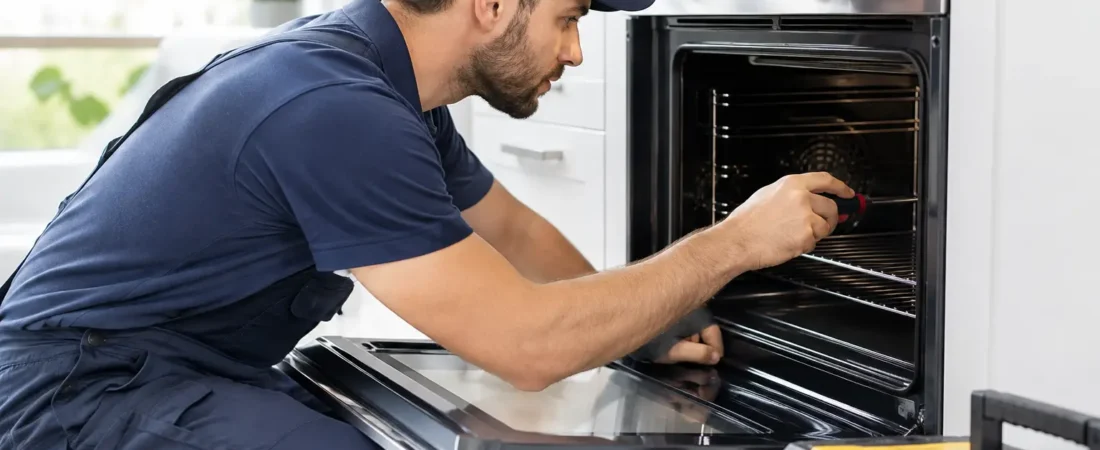
A careful oven diagnosis should go beyond installing the most commonly failed part. The technician should verify incoming power or gas operation, test heating performance, inspect relevant wiring and connections, and evaluate controls, sensors, elements, igniters, fans, and door components as the symptom requires.
The right repair depends on the appliance’s age, condition, and parts availability. Replacing a single failed element in an otherwise reliable oven is often practical. A unit with multiple electrical problems, a damaged cavity, unavailable control parts, or repeated failures may call for a conversation about repair cost versus replacement. There is no one answer for every model.
For homeowners and property managers in Miami-Dade and Broward County, King Appliances can help diagnose oven problems with a model-specific approach rather than assumptions. Clear symptom notes and prompt service can prevent a heating issue from becoming a canceled dinner, a damaged appliance, or a larger kitchen repair.