
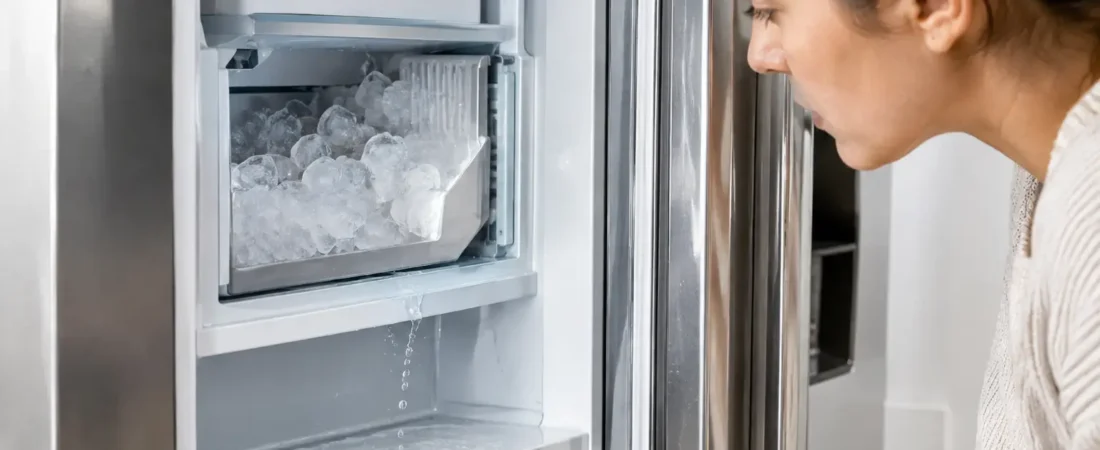
A puddle beneath the refrigerator is rarely just a housekeeping problem. If you are asking, why is ice maker leaking, the water may be coming from the ice maker itself, its supply line, the freezer, or a nearby refrigerator component. Finding the true source matters because a slow leak can damage flooring, cabinets, and, in a condominium, the unit below.
Most ice maker leaks are repairable. The best first step is to determine whether the water is appearing inside the freezer, under the refrigerator, or at the back of the appliance. Do not assume that ice cubes or condensation are the cause without checking. A refrigerator can continue making ice while a water connection or drain system is beginning to fail.
Why Is Ice Maker Leaking Into the Freezer?
Water or sheets of ice in the freezer usually point to a fill problem. The ice maker needs a measured amount of water during each cycle. When too much water enters, or when it enters in the wrong place, it freezes into a slab, spills over the mold, or runs down the freezer wall.
A fill tube may be frozen or out of position
The fill tube carries water from the refrigerator’s valve to the ice maker mold. If the tube freezes shut, incoming water may spray or back up instead of flowing neatly into the mold. You may see a thick ice buildup behind or above the ice maker, misshapen cubes, or an ice maker that stops producing altogether.
A frozen fill tube can result from a small valve leak, low freezer temperatures, or poor airflow around the ice maker. Carefully removing loose ice may provide a clue, but forcing the tube, using sharp tools, or heating plastic parts aggressively can cause further damage. The underlying cause should be corrected or the tube may freeze again.
The water inlet valve may not close completely
At the back of the refrigerator, the water inlet valve opens briefly to fill the ice maker. When its internal seal wears out, it can seep after the fill cycle ends. That extra water overfills the mold and eventually spills into the freezer.
This issue is easy to confuse with an ice maker that is simply cycling normally. The difference is timing: a failing valve can drip long after the ice maker should have finished filling. It may also create oversized cubes joined together by ice. Replacing the valve is typically more reliable than trying to clean or adjust it.
The ice maker may be damaged or misaligned
A cracked ice mold, loose mounting screws, or an ice maker that sits at the wrong angle can allow water to escape before it freezes. This is particularly worth checking after a refrigerator has been moved, serviced, or bumped during cleaning. Some models have a level adjustment, while others rely on fixed mounting points.
Ice makers are not interchangeable across brands or even across similar refrigerator models. Using the correct part for a Sub-Zero, GE, Whirlpool, LG, Samsung, KitchenAid, or other refrigerator is essential. An incorrect replacement can fit physically yet fail to fill or harvest correctly.
Why Is Water Leaking Under the Refrigerator?
A puddle on the kitchen floor often comes from the water supply connection rather than the ice maker mold. Pull the refrigerator forward only if it can be done safely without stretching the power cord or water line. Look for moisture at the lower rear panel, along the supply tubing, and around the floor beneath the front of the unit.
A loose water line connection is a common culprit
The refrigerator’s water line may connect at the wall shutoff valve, a filter housing, or the inlet valve. A fitting can loosen over time, especially if the refrigerator is moved for cleaning or if the tubing is bent behind the appliance. Even a tiny drip can create a significant puddle over several hours.
Dry the area first, then place paper towels beneath the connections. Check again after the ice maker fills or after dispensing water, if the refrigerator has a dispenser. This can help identify the active leak without disassembling the appliance.
Do not overtighten plastic fittings. Cracking a connector or stripping threads can turn a minor drip into a larger leak. If water is escaping from a damaged line, turn off the refrigerator’s water supply and arrange for repair.
The water filter or filter housing may be leaking
A filter that is not fully seated, has a damaged O-ring, or is the wrong replacement type can leak inside the fresh-food compartment or behind the refrigerator. Water may then travel through insulation or cabinet channels before reaching the floor, making the source seem unrelated to the filter.
Remove and reinstall the filter according to the refrigerator’s instructions. Inspect the filter for cracks and check the housing for moisture. If the housing itself is cracked, replacing only the filter will not solve the problem. Avoid continuing to use a leaking filter system, since water can reach electrical components or cabinetry.
A clogged defrost drain can mimic an ice maker leak
Not every refrigerator puddle involves the water supply. Frost-free refrigerators periodically melt accumulated frost, and the water should flow through a defrost drain to a pan underneath the appliance. If that drain freezes or clogs, water can overflow into the freezer, refrigerator compartment, or floor.
Signs of a drain issue include ice beneath freezer baskets, water appearing after a defrost cycle, or a puddle even when the ice maker has been turned off. This distinction is useful because replacing an ice maker will not correct a blocked drain.
Safe Checks Before Calling for Service
Start by protecting the area. Move rugs, towels, and stored items away from the puddle. If water is near an outlet, power cord, or exposed wiring, avoid standing in water and turn off power at the appropriate breaker if it is safe to do so.
Then turn off the ice maker using its switch or lift arm, depending on the model. If the leak stops after several hours, the fill system becomes more likely. If it continues, check for a filter, supply line, defrost drain, or condensation issue instead.
Take a few photos before removing ice or drying every surface. Photos of the ice pattern, the location of the puddle, and wet connections can shorten the diagnostic process. Also note whether the leak happens after ice production, after using the water dispenser, or at random times.
Avoid using tape as a long-term repair on pressurized water tubing. Do not puncture ice buildup with a knife or screwdriver, and do not leave the refrigerator pulled out where a water line can be kinked. These temporary measures often conceal the problem while increasing the risk of water damage.
When Professional Ice Maker Repair Is the Better Choice
A homeowner can often identify a loose filter or visible supply-line drip. However, leaks involving an inlet valve, hidden tubing, electronic ice maker controls, a damaged filter housing, or repeated frozen fill tubes usually need professional diagnosis. Premium built-in refrigerators and tightly fitted condo installations may require additional care to access components without damaging cabinetry or flooring.
Professional service is also warranted when the leak has reached the electrical area, when ice is building repeatedly around the ice maker, or when the refrigerator is not maintaining normal temperatures. In South Florida, where many homes and seasonal properties may sit unoccupied for periods, a small refrigerator leak can become a costly water event before anyone notices it.
King Appliances can diagnose refrigerator and ice maker leaks for homeowners and property managers across Miami-Dade and Broward County. A technician can trace the water path, test the inlet valve and fill cycle, inspect the drain system, and confirm that the repair addresses the cause rather than only the visible puddle.
Until the source is confirmed, keep the water supply off if the leak is active and check the floor around the refrigerator regularly. A dry floor after the right repair is more than a convenience – it is protection for the home around it.