
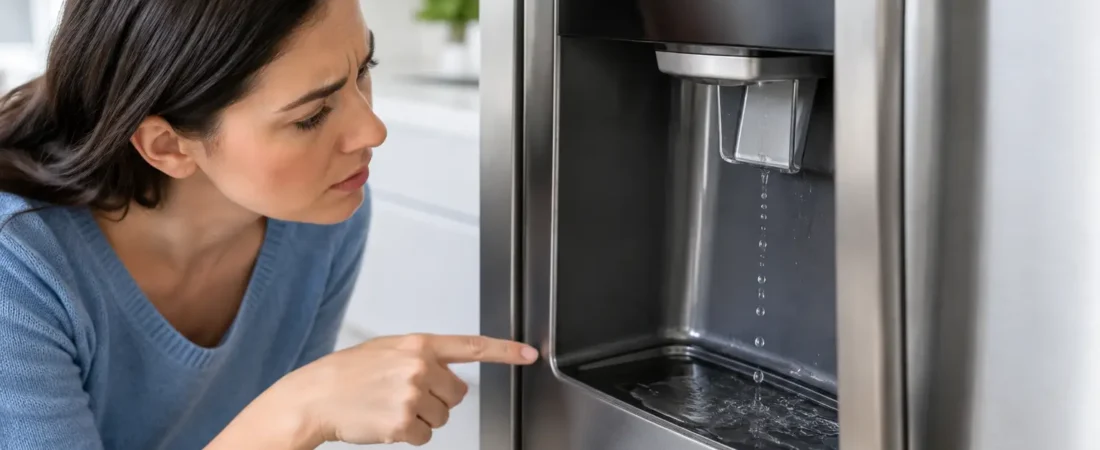
A refrigerator dispenser leaking can be anything from a few drops after filling a glass to water collecting beneath the refrigerator. The difference matters. A harmless residual drip needs a simple cleaning or adjustment, while a damaged water line, faulty valve, or frozen reservoir can create hidden water damage in a kitchen cabinet or condo floor.
Start by observing exactly where the water appears and when it happens. Does it drip from the dispenser nozzle only after use? Does water come out while no one is pressing the paddle? Is it pooling at the bottom of the fresh-food compartment or on the floor? Those details narrow the diagnosis much faster than replacing parts at random.
When a Refrigerator Dispenser Leaking Is Normal
A small amount of water may remain in the dispenser nozzle after a glass is filled. This is especially common with tall dispenser assemblies, where water can cling inside the tip and fall a few seconds later. One or two drops are usually not a repair issue.
First, wipe the nozzle and recess thoroughly with a soft cloth. Mineral deposits, dried beverage residue, and debris can cause water to track along the plastic instead of falling straight into the glass. In South Florida, hard-water minerals can make this buildup more noticeable over time.
Also check how long the dripping continues. A few drops immediately after dispensing are normal. A steady drip lasting several minutes, or water that returns after the area is dried, points to a problem within the water system.
Common Causes of a Leaking Refrigerator Dispenser
Air trapped in the water line
Air in the supply line is one of the most common reasons a dispenser drips after use. It may happen after a new filter is installed, after the refrigerator has been moved, or after a water shutoff was turned off and back on. As trapped air shifts through the line, it can push small amounts of water out of the dispenser.
With a large container under the dispenser, draw and discard several glasses of water. Many manufacturers recommend dispensing two to three gallons after fitting a new filter, though the exact amount varies by model. If the stream sputters at first and then becomes smooth, the air was likely the issue. If dripping continues after the line has been purged, look further.
A filter that is loose, damaged, or incorrect
An improperly installed water filter can cause leaks inside the refrigerator, behind the filter housing, or occasionally through the dispenser system. Remove the filter and inspect the O-rings for cuts, flattening, or missing seals. Reinstall it carefully, following the lock-and-turn direction marked on the housing.
A compatible filter is not always identical to an approved manufacturer filter. Some aftermarket filters fit physically but do not seal reliably or restrict water flow differently. If leaking began immediately after a filter change, reinstalling the old filter briefly, if it is still usable, can help confirm the source. Do not force a filter into place.
A frozen water reservoir or door line
Many side-by-side and French-door refrigerators route water through a reservoir behind the crisper drawers or through tubing inside the freezer door. If that water freezes, it can block flow, create sputtering, or damage a line and fitting. This is more likely when the freezer is set too cold, food packages obstruct air vents, or a temperature-control issue is present.
A dispenser that slows down before it begins leaking deserves attention. The refrigerator may cycle between normal flow and a partial blockage. Avoid using a hair dryer or sharp object to thaw a suspected frozen door line. Excess heat can warp the liner, and puncturing an internal water tube can turn a minor service call into a door replacement.
A leaking inlet water valve
The inlet valve is usually located behind the refrigerator near the bottom, where the household water supply connects. It opens electrically when the dispenser or ice maker calls for water. If sediment, wear, or an internal defect prevents the valve from closing fully, water can continue moving through the line after dispensing ends.
A valve problem often causes a slow, repeated drip from the dispenser. It may also overfill the ice maker or leave moisture around the rear connection. Because the valve handles both water and electrical connections, it is best evaluated with the refrigerator unplugged and the water supply shut off. A technician can test whether the valve is leaking internally or whether the dispenser control is continuing to energize it.
Cracked tubing or loose fittings
Water lines can develop cracks from age, vibration, movement during cleaning, or stress at a connection. The water filter housing, lower hinge area, inlet valve, and tubing behind the refrigerator are common inspection points. On some models, the tubing that passes through the bottom hinge is particularly vulnerable because the door opens and closes around it every day.
Pull the refrigerator forward only if it can be done safely without straining the power cord or water line. Place towels behind it and inspect for moisture at the supply connection, valve, and visible tubing. If a fitting is wet, do not assume it simply needs tightening. A cracked line or damaged connector can leak more when pressure changes.
A dispenser paddle or switch that sticks
If water dispenses without anyone using it, the paddle, microswitch, or electronic control may be sticking. Sticky residue around the paddle can interfere with its return movement. Clean the exterior area with a lightly dampened cloth, then dry it completely. Do not spray cleaner directly into the dispenser opening or control panel.
If the paddle moves freely but water continues to run, shut off the refrigerator’s water supply immediately. The fault may be a failed switch, control board, or inlet valve. Leaving the supply on can result in a significant leak while the home is unattended.
How to Check the Problem Safely
Before inspecting any internal component, disconnect power if you will remove panels or work near wiring. Shut off the refrigerator water supply before moving the appliance or disconnecting a tube. Keep towels nearby, since even a short section of line can hold water under pressure.
A practical check starts with the dispenser itself. Dry the recess and nozzle, dispense water for several seconds, and watch what happens after you release the paddle. Next, inspect the filter area and refrigerator floor. Finally, check behind the unit for dampness or a slow drip at the supply connection.
Avoid repeatedly cycling the dispenser if water is pooling inside the door or beneath the refrigerator. Water can reach flooring, cabinetry, electrical components, or the refrigerator’s insulation. For tenants and condominium residents, prompt reporting can also help prevent damage to neighboring units.
When Professional Refrigerator Repair Makes Sense
Professional service is appropriate when the leak is coming from inside the door, behind a panel, around the inlet valve, or under the refrigerator. It is also the safer choice if the dispenser runs on its own, the water line is frozen, or the refrigerator has premium features and concealed tubing. Models from Sub-Zero, Miele, Bosch, Thermador, LG, Samsung, KitchenAid, and other major brands may use different filter housings, valves, and electronic controls, so an accurate diagnosis matters.
A technician can isolate the water circuit, test the inlet valve and dispenser switch, check water pressure, and inspect lines that are not accessible without disassembly. Replacing a valve or tube without confirming the failure can leave the original problem unresolved.
King Appliances assists homeowners and property managers throughout Miami-Dade and Broward County with refrigerator water-system problems, including dispenser leaks, ice maker leaks, filter housing failures, and damaged supply lines. If the water has been shut off and the leak source is not obvious, service is usually the most practical next step.
A dry dispenser recess after use is a good sign. A drip that persists, returns on its own, or appears on the floor is your refrigerator asking for attention before a small water problem becomes a larger repair.